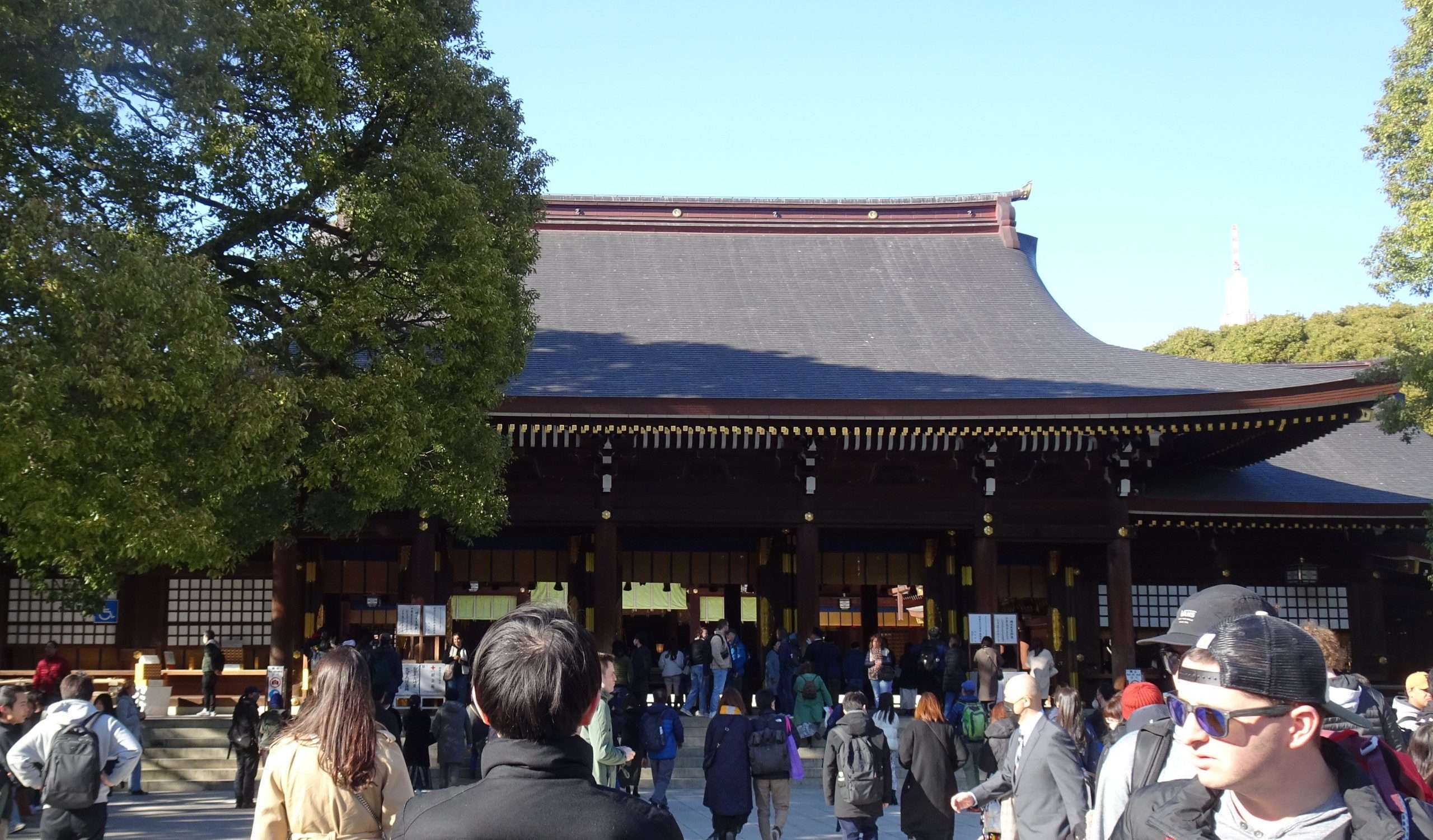
The Meiji Shrine (Meiji Jingū 明治神宮) is a Shinto shrine dedicated to the deified Emperor Meiji. In 1868, Emperor Meiji led Japan out of a long period of isolation (though American gunboat diplomacy also forced this outcome). In the following years, Japan transformed from a feudal state into one of the world’s most powerful industrial nations. This is one of the foremost reasons why Emperor Meiji remains one of the most revered figures in recent Japanese history.
The shrine was built in 1920, eight years after the emperor’s death. It was destroyed during World War II but immediately rebuilt. It is therefore a modern structure, constructed using modern materials like concrete. Despite this, the entire complex still appears very traditional, thanks largely to its location in the middle of a vast park in Shibuya. Much like Shinjuku Gyoen, it’s an oasis amid one of the busiest areas in greater Tokyo.
Getting there
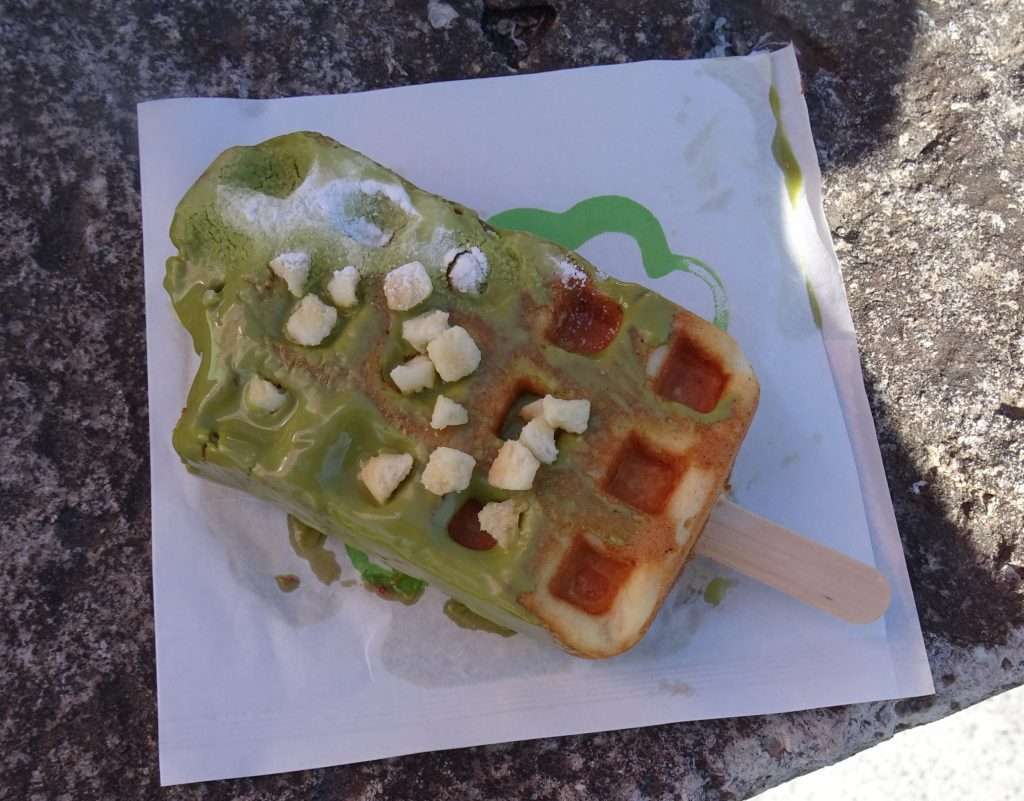
Since I was coming from Shinjuku, it was easiest to get off at Sendagaya. From there, it was only a few minutes’ walk through what I can only describe as “Tokyo’s greatest hits in miniature”—high-rise buildings, a small pony farm (because why not?), and several snack and ice cream carts stationed like sirens calling to weary travelers. Naturally, I answered the call and bought a waffle with matcha cream: very tasty, very sweet, and precisely the sugar injection my brain demanded after navigating Shinjuku Station.
I stood there watching children ride ponies while demolishing my waffle, living my best life in what felt like a fever dream of urban contrasts. Tokyo in a nutshell, really—skyscrapers on one side, tiny ponies on the other, matcha waffle in hand.
It was getting quite warm now, and I found myself eyeing the drinks machine with regret—no change in my pockets. Somehow it didn’t occur to me to use my Suica card, despite having used it approximately 47 times already that day. Live and learn.
A short walk in Meiji Jingū Park
I entered the grounds through the Kitasano Torii. These massive gates mark the transition from the mundane world to sacred space—a symbolic threshold you pass through on your way to the shrine. In beautiful sunshine, I strolled along the forest paths, past the old guardhouse. Since I’d already had my daily dose of “park” in Shinjuku, I headed purposefully toward the main shrine. It’s not really possible to lose your bearings here, but I still took my time—rushing through a sacred forest felt somehow wrong.
After a few hundred meters, I reached the shrine itself. It was lunchtime, and people were everywhere. I looked around a bit, then joined the prayer line and did what everyone else did: make a wish, bow, clap twice, hope I got the sequence right. It couldn’t hurt, even if I’m not particularly spiritual. When in Rome and all that—or rather, when in a Shinto shrine.
I snapped a few photos, particularly captivated by the roof structure with its beautiful lanterns. The Meiji Jingu Museum looked interesting as well, but was closed that day. Just as I turned to leave, I noticed a wedding procession entering through the south gate. I’d seen this on TV before, but witnessing it in person was something else entirely—the elegant kimonos, the solemn procession, the whole ceremonial atmosphere. I stood there probably looking like the definition of “enchanted tourist.”
Then I headed to the other exit, this time toward Harajuku, to catch the subway to Shibuya Center. Along the way, I passed two impressive storage racks that captured something wonderful about Japanese culture—the reverence for both heritage and harmony:
- First, barrels of French wine from Burgundy, apparently serving as a symbol of friendship between Japan and France. Sure, why not? International relations via fermented grapes.
- Second, sake barrels from all over the country, donated as offerings. I have no idea whether anyone actually drinks them—it would be a terrible waste if not, but I suspect the gods get first dibs.
I quickly reached the station and took the train to Shibuya, trading forest serenity for the biggest hustle and bustle imaginable.
Pictures – click on the photo for more information:
To the previous destination – Back to the overview – To the next destination