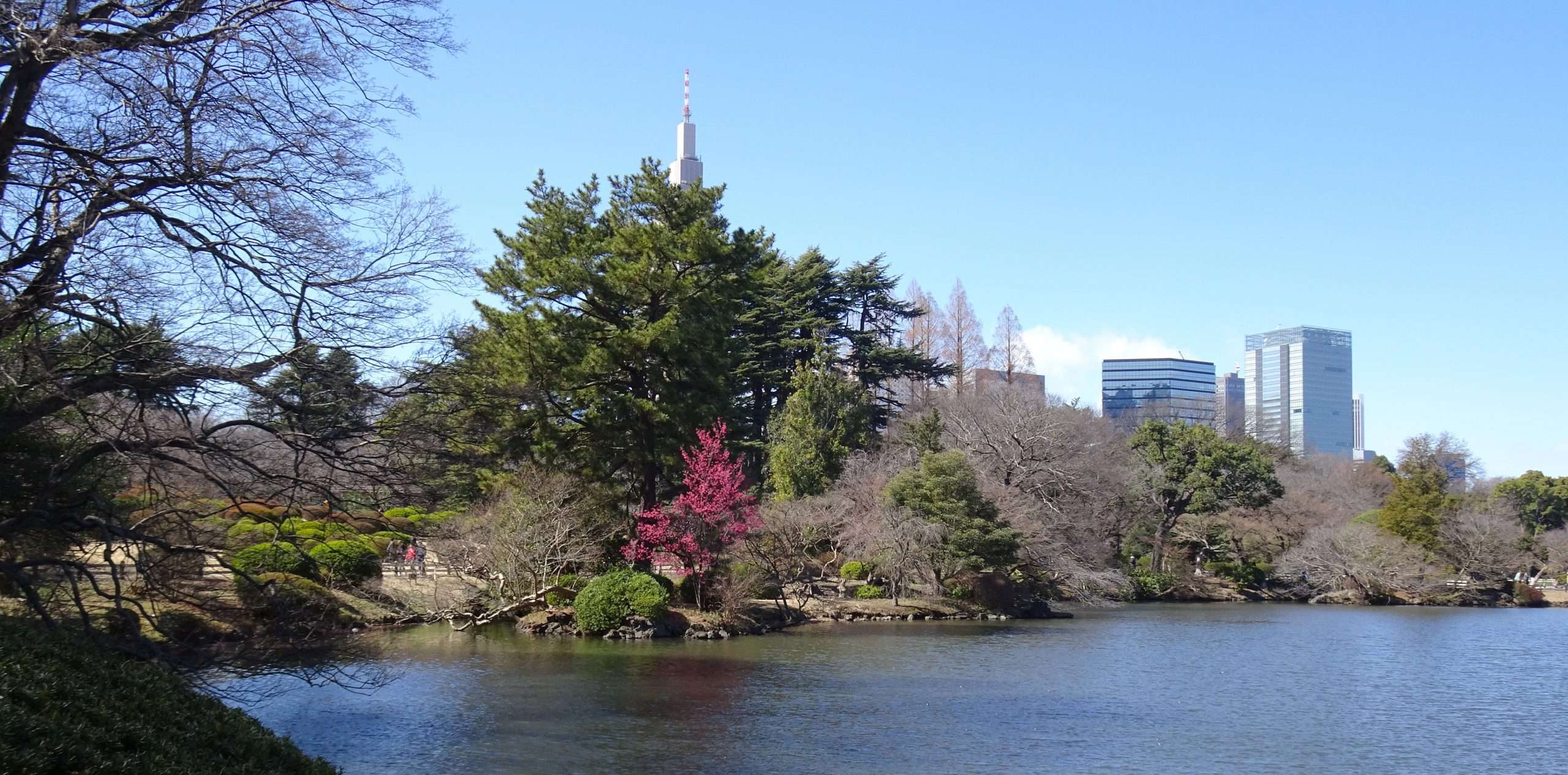
Shinjuku Gyoen is a large park in Shinjuku, one of Tokyo’s major districts. The park was originally privately owned before being converted into an imperial garden toward the end of the Meiji period. It has been open to the public since 1949.
Japanese gardens are designed to offer interest in every season, and Shinjuku Gyoen is no exception. Though it was still a bit early for the cherry blossoms (aside from a few early-blooming varieties), camellias were already flowering everywhere. At the Upper Pond, ducks were basking in the fairly warm spring sun.
Highlights in Shinjuku Gyoen
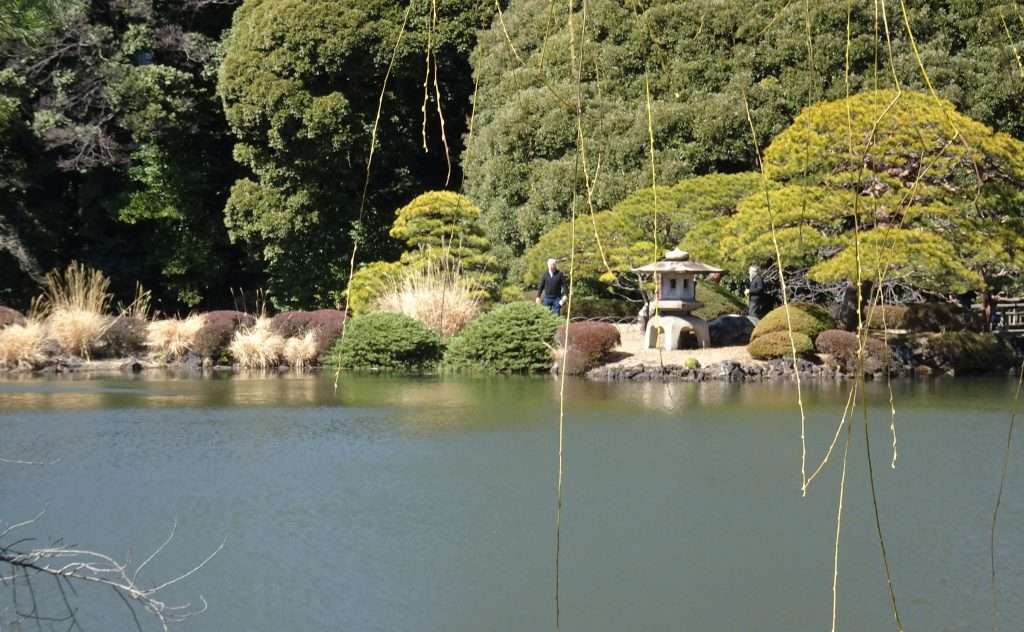
The park consists of several sections, each with a different design. The Japanese garden, located toward the west, is composed of small islets connected by bridges. At the center stands the Taiwanese Pavilion, built in 1924 for Emperor Hirohito‘s wedding. The pavilion is modeled after the Taiwanese Chinese style that was popular at the time, with particularly impressive carved ceiling beams.
I sat down on a bench near the pavilion and closed my eyes for a few minutes. Listening to the wind rustling through the bamboo while the sun warmed me felt simply amazing. Finally, a day with good weather! I took the opportunity to research my evening plans—a Kabuki play—and booked a ticket for a tourist performance on the spur of the moment.
The English Garden is laid out extensively and lavishly, though it was too early in the year for most of the flowers and trees. Spring hadn’t yet arrived in the Formal Garden in the eastern part either. The latter is reminiscent of French Baroque gardens and blooms with many roses in summer, including some rare varieties.
The Greenhouse
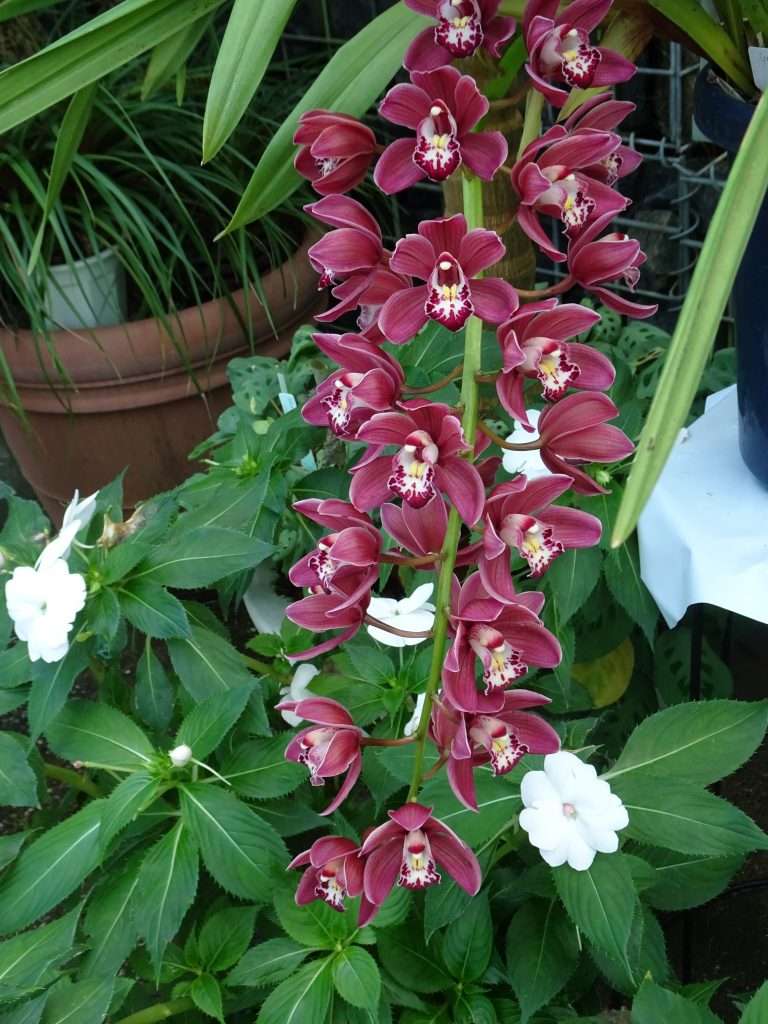
On the way back, I passed the large greenhouse and spontaneously decided to peek inside, hoping to see more flowering plants. I wasn’t disappointed. Unfortunately, the humidity made it nearly impossible to take decent pictures—my lens fogged up almost immediately. A short path of maybe 20 minutes winds through several levels past a small waterfall, showcasing plants from tropical and subtropical regions.
Right next door is the old Emperor’s rest house, which has just been restored, along with the old greenhouse and botanical research center (both currently closed). The latter will soon reopen as a museum.
I wandered around a bit more. A group of photographers had already gathered around the few cherry trees in bloom, so I joined them and embraced my inner tourist.
A peaceful oasis
Shinjuku is otherwise very urban, characterized by towering skyscrapers. The famous train station is almost overwhelming, and it’s easy to get lost there (I managed to). The park is an oasis of calm amid all the hustle and bustle. Unfortunately, the teahouses were closed, but I still grabbed a delicious lunch at the park restaurant. As always in Japan, you can eat anywhere without worrying about the quality of the food.
It was a wonderful visit, and at just ¥500, totally affordable. The best way to get there is to take the metro to Shinjuku Gyoenmae Station—from there it’s only a few minutes’ walk.