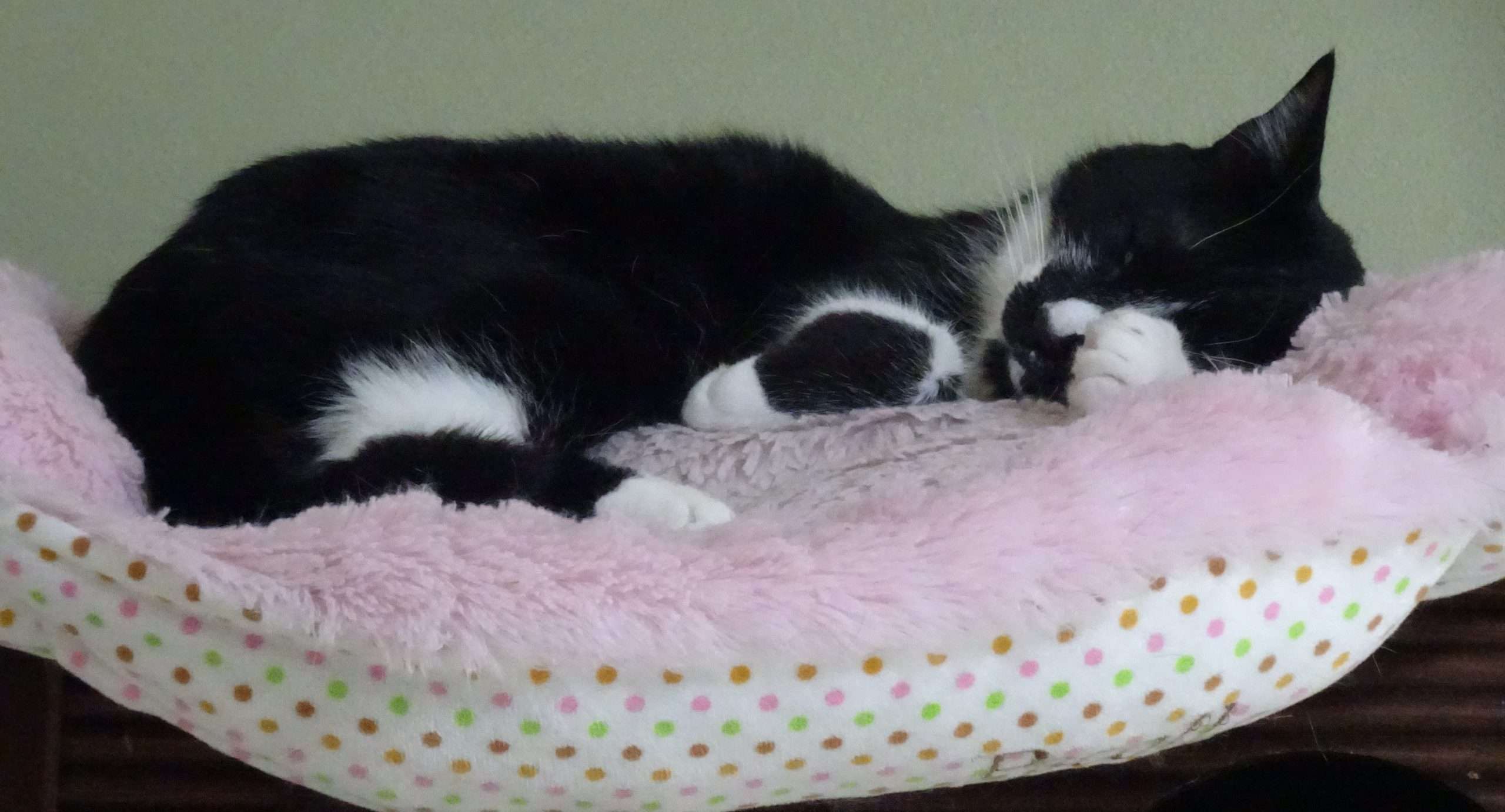
Asakusa
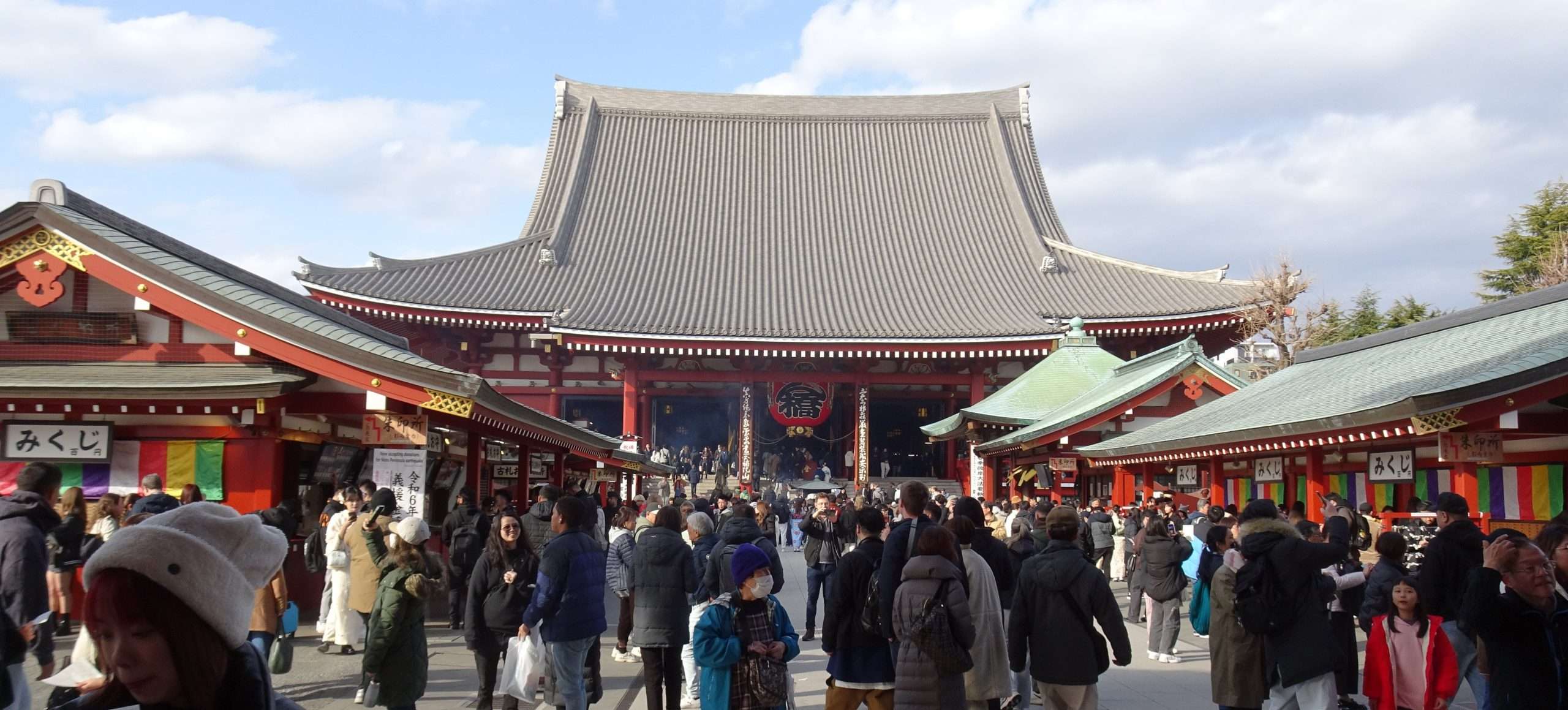
After that wonderful experience, I continued to the main destination of the day: the Sensō-ji. Like every tourist in Japan, I didn’t want to miss that old and important temple complex. It was only a short walking distance from the cat café, and I quickly got to the complex via the east gate.
This was completely different from the Benten-dō, and also completely different from a typical religious building in Germany. Rather comparable to the Cologne Cathedral square. Then I remembered that in the past, things weren’t so different around European churches. We had and still have fairs, flea markets, and weekly markets too, which are all very lively. I remembered how it was always like that in France and Italy, and suddenly this hustle and bustle here didn’t seem so strange to me anymore.
So I threw myself into the fray. I had a funny chance encounter because it seems I always need to have on my trips. But read for yourself:
Akihabara – Shopping, Part 2
After visiting Sensō-ji, I still had time to kill before dinner, so I made a quick detour to Akihabara. Not for serious shopping—this was purely reconnaissance. I wanted to scout the landscape so that when I returned for the real shopping trip, I could be strategic rather than wandering aimlessly.
Yodobashi Akiba
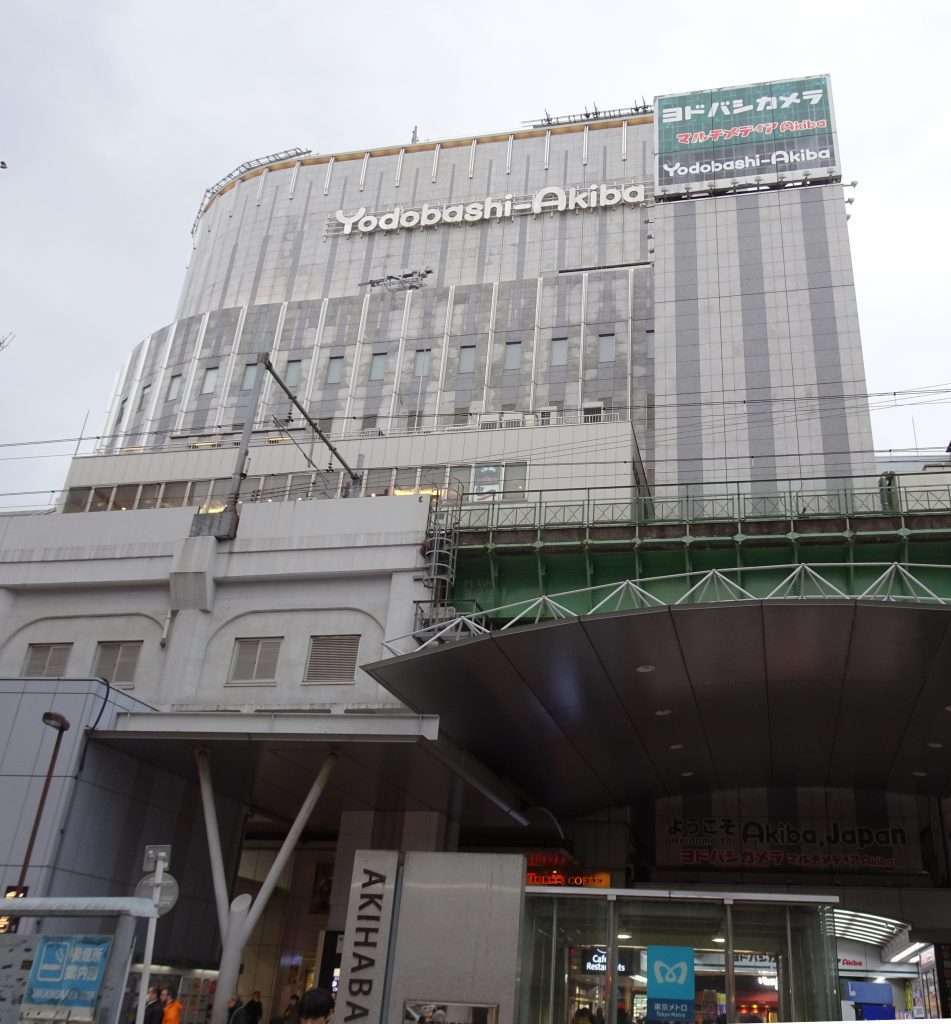
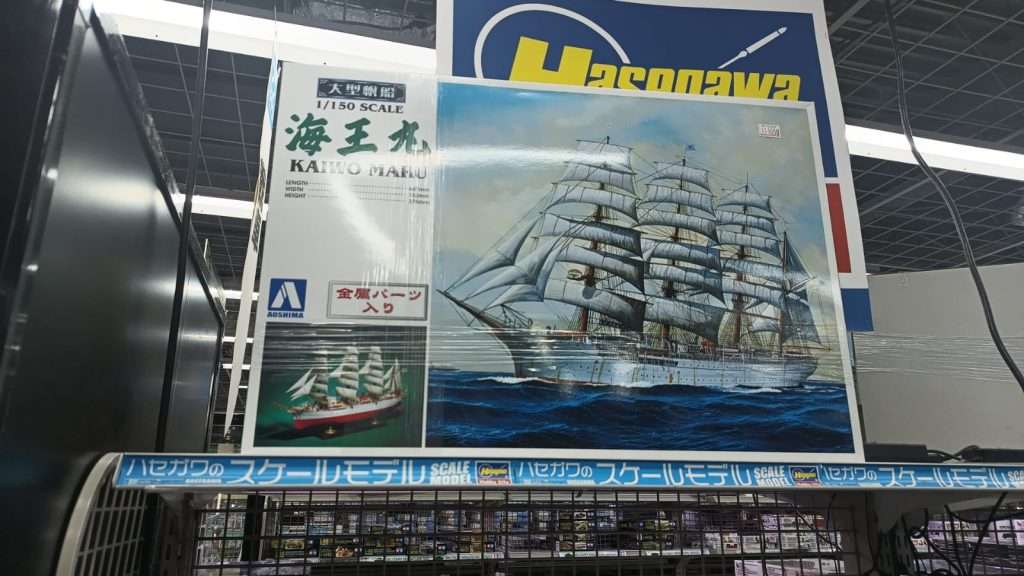
Who was I kidding? Of course I was curious about the legendary electronics markets. I made a beeline for Yodobashi Akiba, and it didn’t disappoint. Beyond the expected sprawl of 2,000 iPhone cases and an entire floor of electronic musical instruments, beyond the massive laptop department (all frustratingly equipped with Japanese keyboards), I discovered something unexpected: a complete floor dedicated to model making.
This was a stroke of luck. I’d been secretly hunting for a specific sailing ship model kit that was nearly impossible to find in Germany. And there it was—I could hardly believe my eyes. The price was remarkable: about ¥15,000, with another 10% tax exemption on top. In Germany, the list price was nearly double. I would have bought it on the spot, but my large suitcase still hadn’t arrived from the airline, and I had no idea how much space I’d actually have.
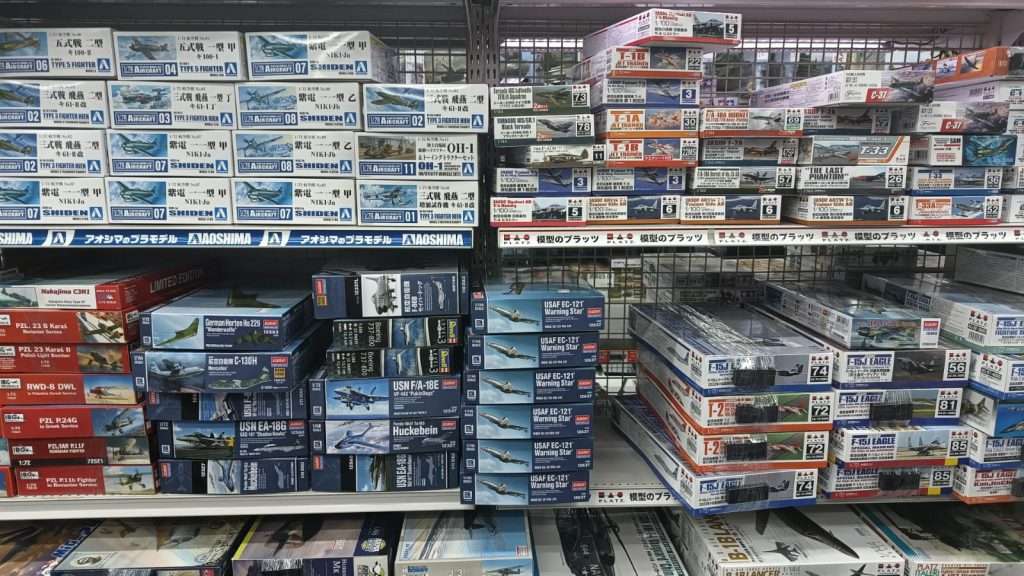
So I carefully noted the location and crossed my fingers it would still be there on a future visit. With any luck, other shops might carry it too. Walking through the floor, though, I couldn’t help noticing that classic plastic modeling—the traditional plamo kits—seemed to be in serious decline in Japan. Military vehicles remained evergreen, always in demand, but the vast majority of shelf space belonged to Mecha, Gunpla, and other anime- and manga-inspired kits. Accessories lined entire aisles—tools, paints, weathering supplies—but I already had everything I needed back home.
Dinner
I left the shop in a daze of sensory overload. I’d planned to hit Donki as well, but time was slipping away and hunger was winning. I texted Amber, and we agreed to meet at 7 PM at Kaminarimon. Google Maps, usually so reliable, decided this was the moment to fail me—I ended up at completely the wrong gate. But after some confused wandering and a few more text messages, we found each other.
We headed to a quirky fusion pub nearby that served Japanese-style pizza. My topping? A generous heap of tiny white fish — shirasu, I later learned — that looked disconcertingly like wriggling worms. I sincerely hoped they were all dead—I was decidedly not in the mood for gagh. I closed my eyes and took a tentative bite.
It was perfect. Absolutely delicious. I devoured the rest with considerably more enthusiasm, thoroughly satisfied and pleasantly surprised. But as I finished, exhaustion hit me like a wave—suddenly I was very, very tired. The day’s adventures had caught up with me. I decided then and there that tomorrow would be a gentler pace…