Day three finally delivered on the weather front, so I took that as a sign to swap dead artifacts for living things: parks, people, and — because this is Japan — the obligatory temples.
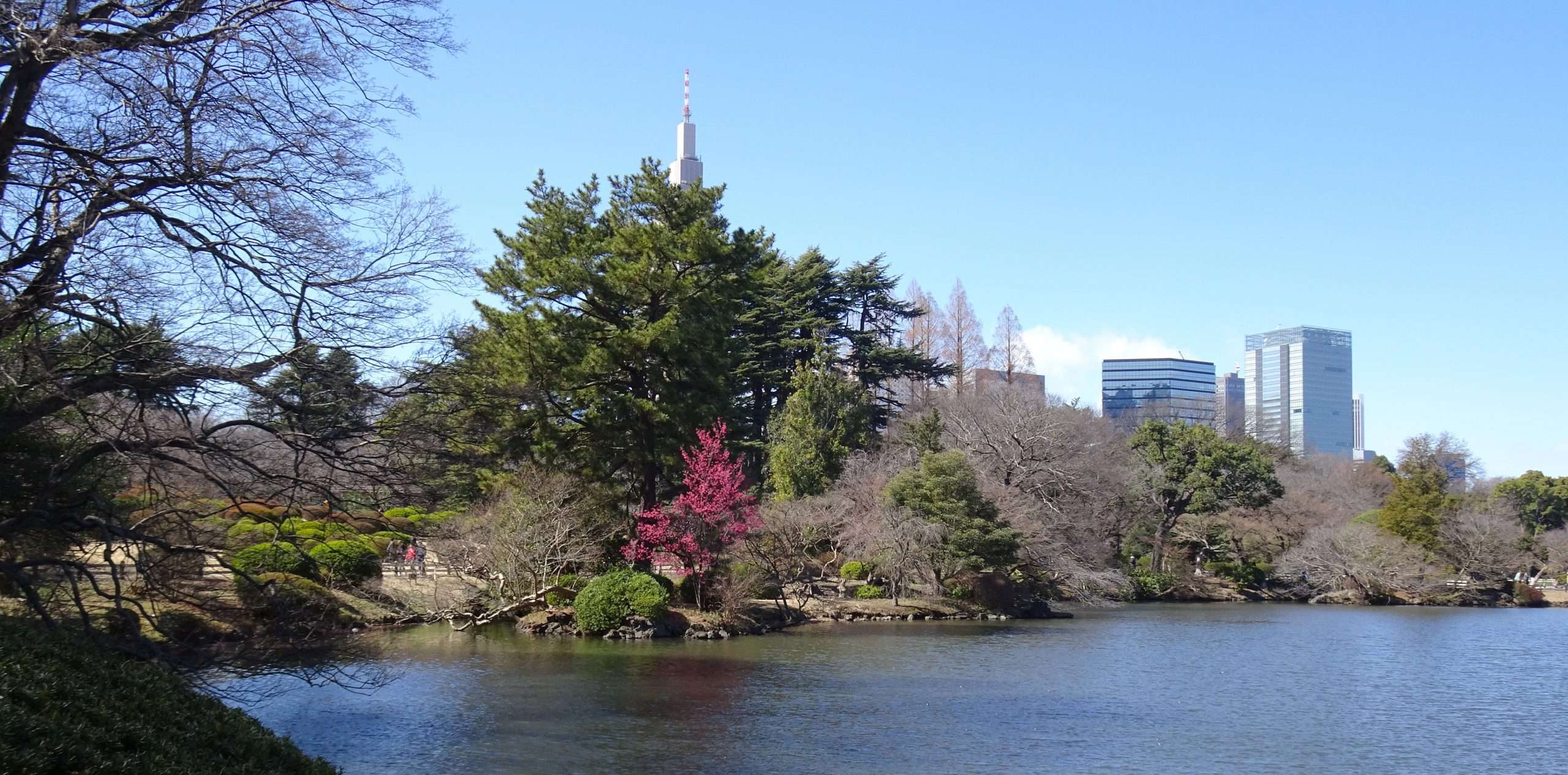
First stop: Shinjuku Gyoen, a vast park wedged into the heart of Shinjuku. The cherry blossoms hadn’t quite gotten the memo to bloom yet, but it was still a fine place to soak up some sun and appreciate the kind of meticulously composed Japanese garden design that makes you feel like you’re inside a woodblock print. After breakfast, I made my way to the metro. It was going to be a heavy subway day, and thank god for the SUICA card — the little penguin mascot almost makes you forget how much ground you’re covering. I had not, however, put any thought into planning an efficient route between my destinations, which meant I spent a portion of the day zigzagging back and forth across the city unnecessarily. Could’ve been worse 🙂
Shinjuku Gyoen
Stepping into the park felt like someone had hit the mute button on the city — a genuine oasis of calm in the middle of one of the world’s great urban machines. But see for yourself:
Meiji Jingū
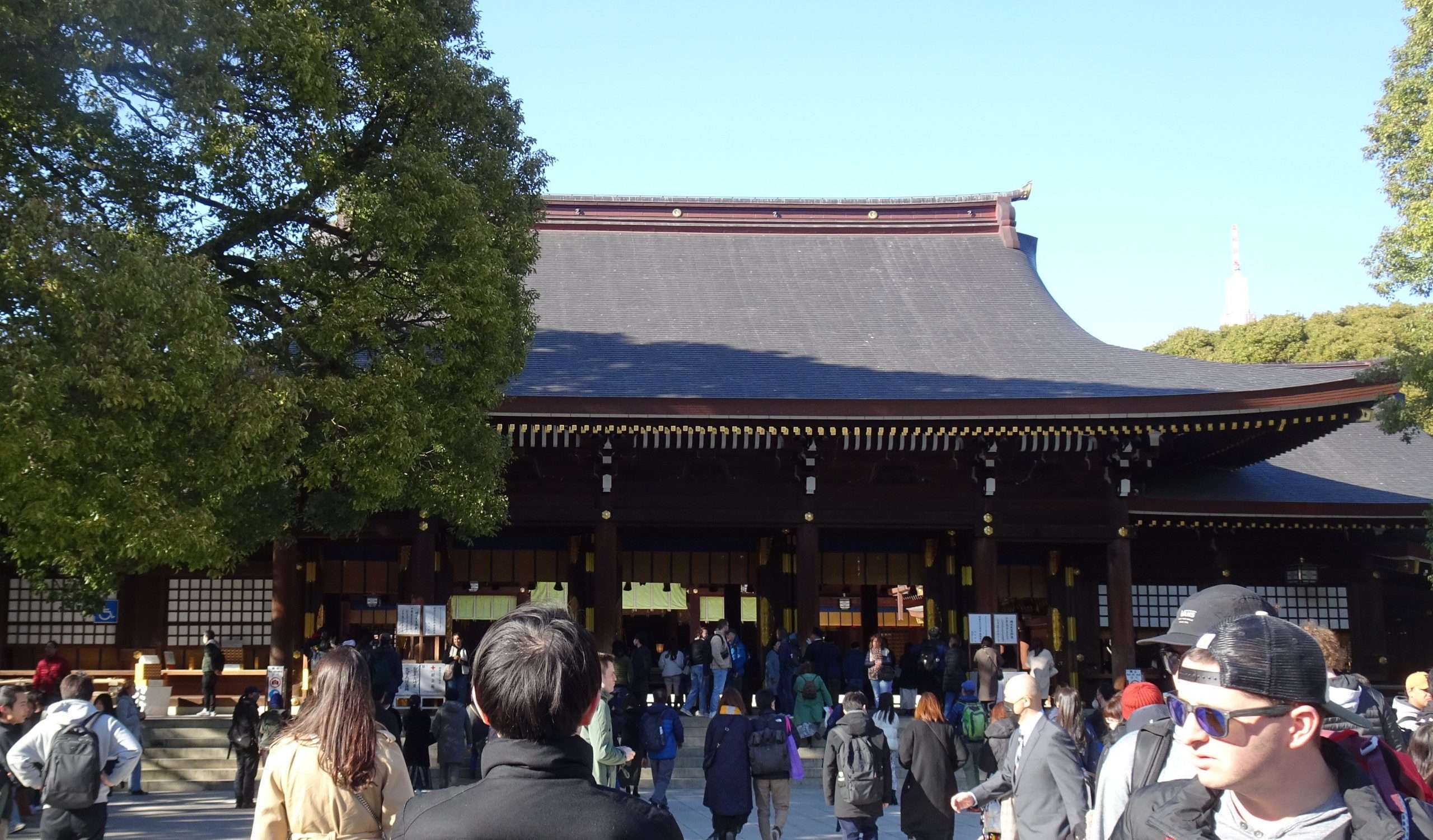
Next up: Meiji Jingū, one of Japan’s most revered Shinto shrines, dedicated to Emperor Meiji — perhaps less of a household name abroad than Fushimi Inari, but deeply significant to the Japanese. I arrived just in time to witness a traditional Shinto wedding procession making its way through the grounds:
Shibuya – first parks, now people
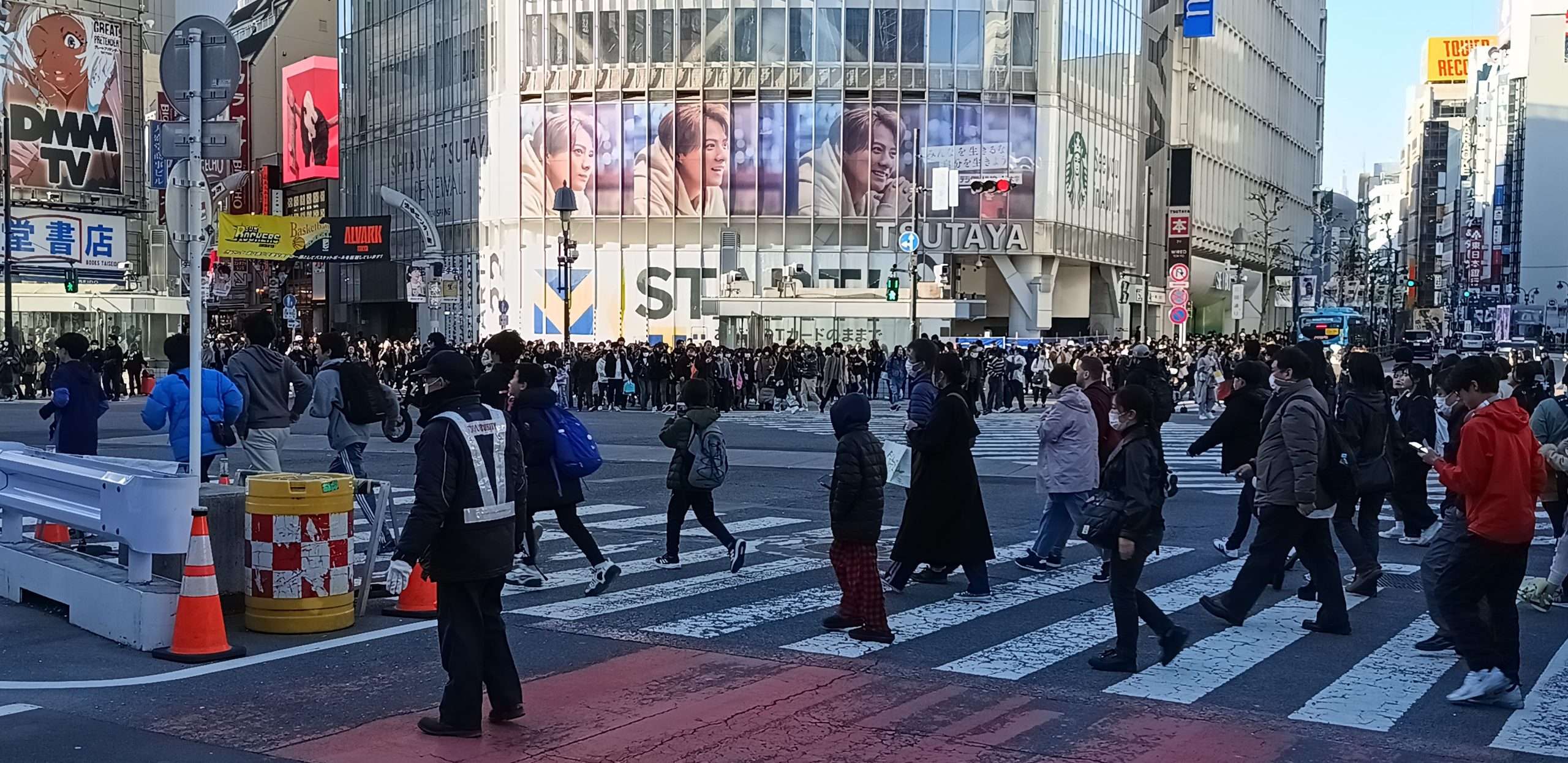
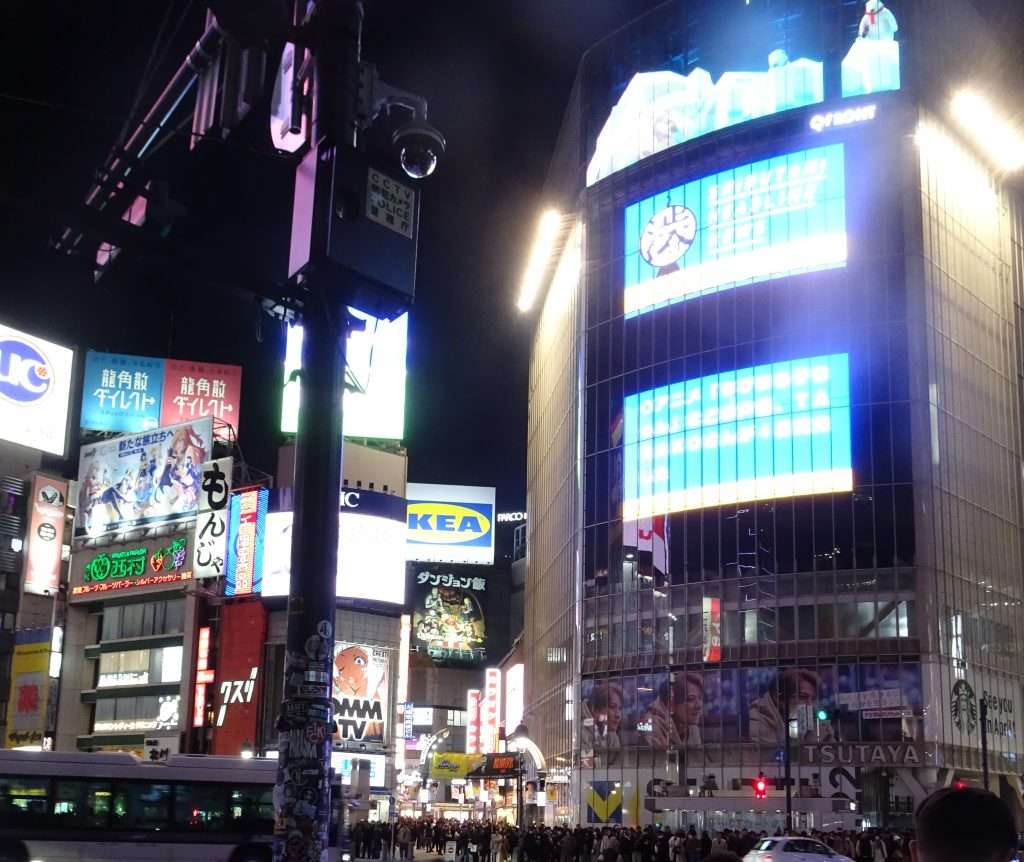
But enough greenery and serenity — it was time for the opposite extreme. My next destination was Shibuya, home to the most famous pedestrian scramble crossing in the world, and quite possibly the most people I had ever seen trying to cross a street at once:
Ginza and Kabuki
I had done some research while sitting in the park sun, because I wanted to tick at least one traditional cultural event off the list. A tea ceremony would have required booking months in advance, and a Noh play struck me as the kind of experience that is deeply meaningful if you’re Japanese, and deeply exhausting if you’re not. Sorry, theatre aficionados. In the National Museum I had already looked into the differences between the various traditional performing arts, and Kabuki seemed the most promising — except for the prospect of sitting through three to four hours of spoken drama in an archaic Japanese dialect. I can barely make it through a full Puccini opera, and at least there I understand most of what’s happening.
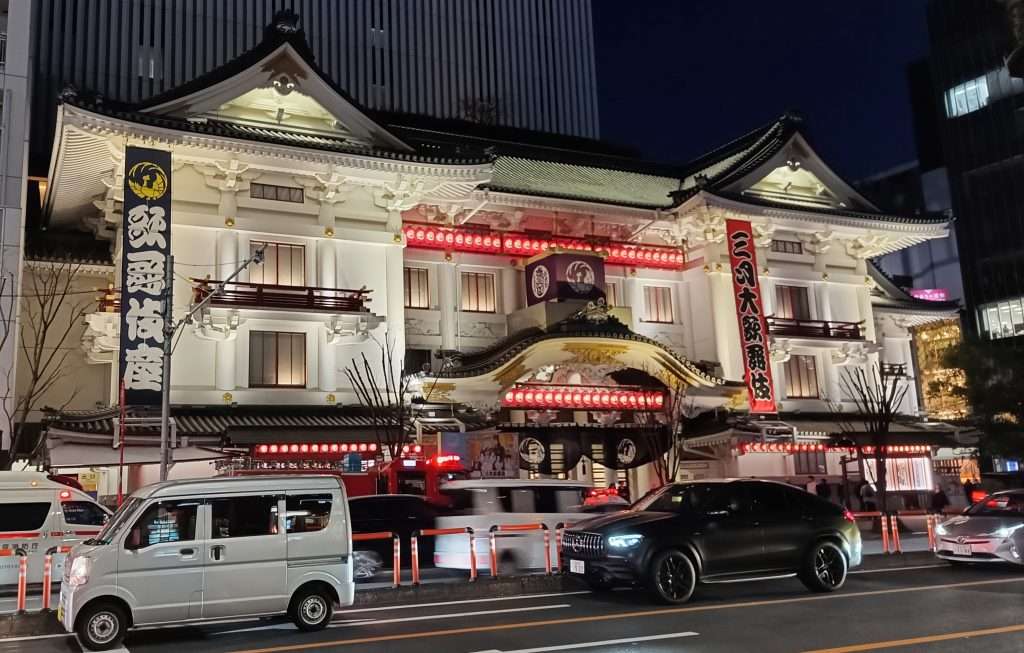
Fortunately, the Kabukiza — the largest Kabuki theatre in Japan, right in the heart of Ginza — also caters to the culturally curious but attention-span-challenged. You can book tickets for just the final acts of a drama: cheaper, shorter, and perfectly respectable. The seats aren’t the best in the house, but I made my peace with that and booked a ticket for a traditional fantasy tale that I can only describe as “cursed sword kills everyone.”
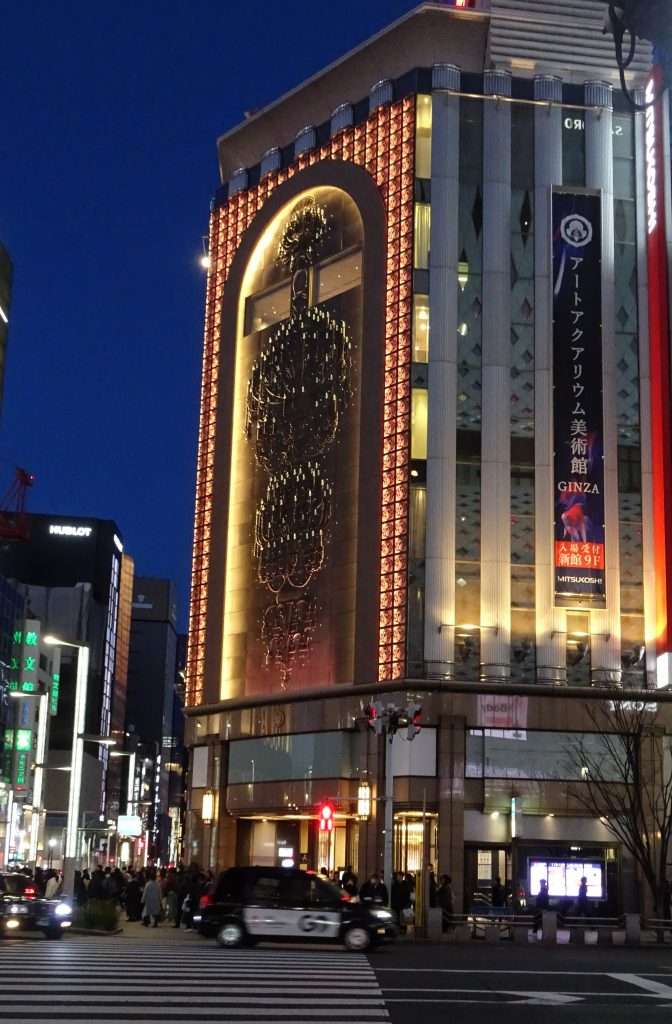
So from Shibuya, I made my way to Ginza. A shopping spree was never on the cards — I wasn’t sure what I’d even buy, and blowing my budget in week one seemed unwise. Asian sizing tends to work against me, jewelry was eye-wateringly expensive, and I already own more cosmetics than I’ll ever use. So I wandered aimlessly through one of Tokyo’s most glamorous districts, killing time until the curtain rose.
Phew… culture…
At the entrance I fell in with a small group of fellow Germans, all of us wearing the same expression of polite uncertainty. Then we went in. Photography and video were strictly prohibited throughout — so you’ll have to take my word for it, or raid the internet for a visual impression.
It was… an experience. I probably understood fewer than five phrases across the entire ninety minutes. The music and the delivery were genuinely interesting, but after a while, undeniably tiring. I laughed when everyone laughed and clapped when everyone clapped, which is really all you can do.
I’d like to think I grasped the basic plot. Reading the synopsis several times hadn’t made it significantly less bewildering, but then again, that’s not so different from most Western opera. It was certainly dramatic — the setting was a brothel, which conveniently covered suffering, drinking, whoring and killing all under one roof. Quite a lot of the latter, because as in any self-respecting opera, everyone was dead by the final curtain. The finer subtleties, however, were entirely lost on me.
A few seats away sat a couple: an older, impeccably dressed gentleman who was thoroughly absorbed in the performance, and next to him, a young woman in a short skirt who was doing her best to check her sumaho without being too obvious about it. I felt a little sorry for her. Only a little.
All of which may sound underwhelming — but it wasn’t. It was genuinely exciting. Just don’t go in expecting to follow much, even if your Japanese is considerably better than mine. The language is archaic, and from what I understand, even many Japanese in the audience don’t catch every word. They know the formulas, the gestures, the moments — and that’s a kind of cultural fluency you can admire even from the outside.
Dinner
By the end of the ninety minutes I was thoroughly spent, and quietly relieved I had opted for the short version. I was also hungry, and increasingly annoyed at myself for not having made a dinner reservation. This was already becoming a pattern — going out without a booking in Tokyo is an optimistic strategy at best, and most restaurants close at ten anyway.
I had scouted a few options near the Shibuya scramble earlier in the day but hadn’t found anything that clicked. Still, Shibuya felt more agreeable on the budget front, so I headed back. It turned out to be harder than expected. Every Izakaya was packed, and frankly, three consecutive days of ramen was my limit. I was hungry enough that I briefly, seriously, entertained the idea of going to McDonald’s — which, after a day of Kabuki and Ginza, would have been a cultural arc of truly spectacular proportions.
Horse meat in Mihachi’s
In the end I stumbled into Mihachi, right by the station. Being a basement restaurant didn’t put me off — it was cozy in a way that somehow blended oak-beam rustic with clean modern interior without looking confused about itself. But the décor was secondary. What mattered was the menu, which turned out to be aggressively meat-focused in a way I wasn’t used to. Normally that would give me pause, but I was hungry enough to be adventurous.
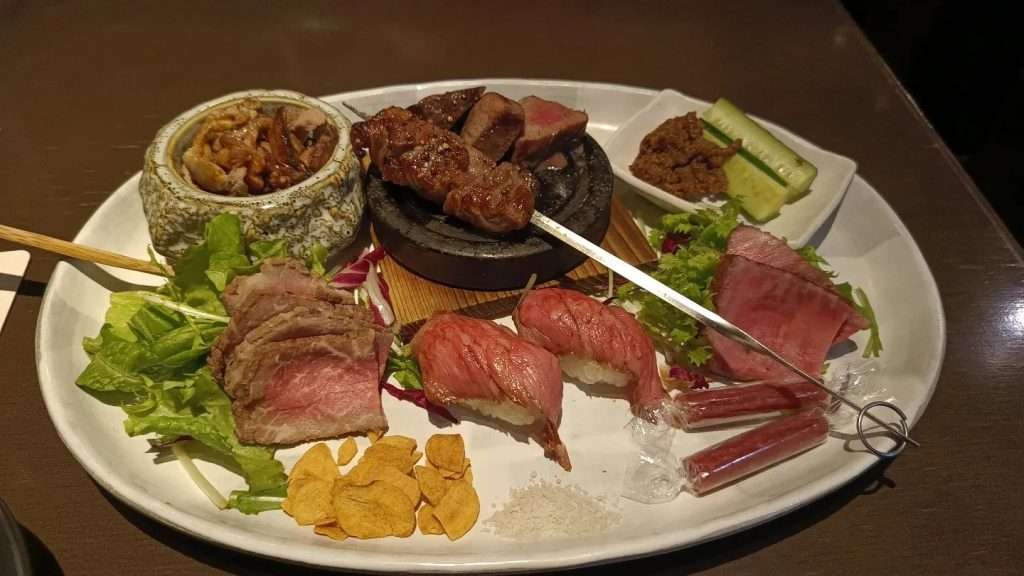
The Kobe beef platters were beyond my budget, but they also had basashi — and not just a token slice, but an entire platter of assorted horse meat preparations: classic basashi, sashimi-style, sausages, and more. I had already tried horse briefly back in Takahashi, and besides, I had made a conscious decision at the start of this trip not to shy away from anything new. So.
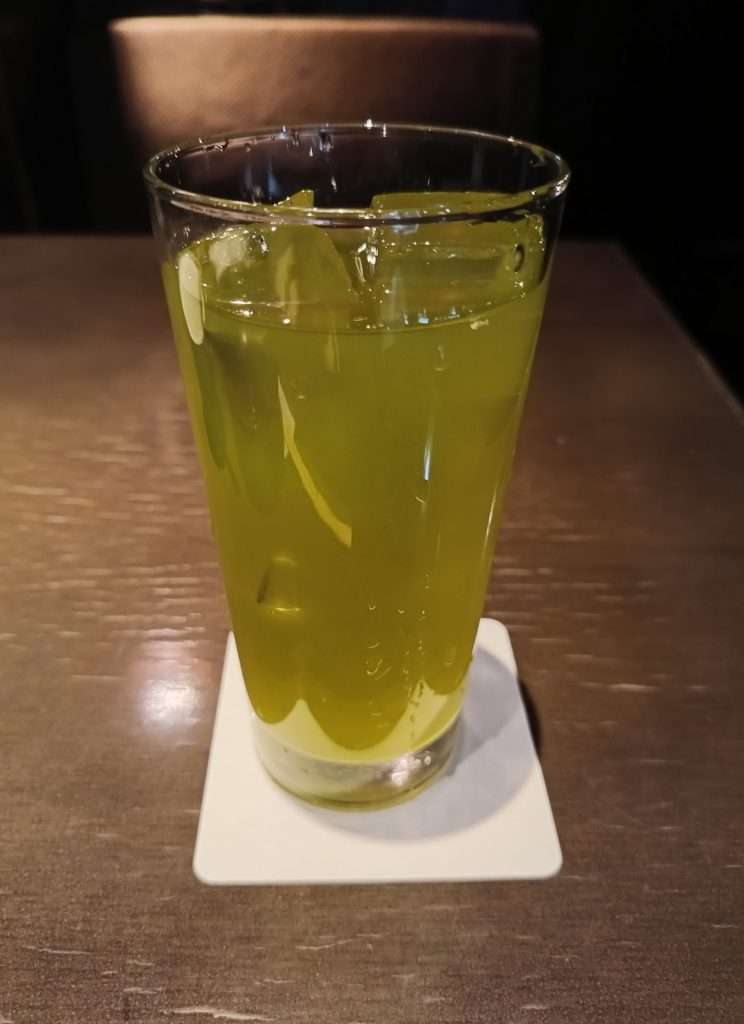
What can I say — it was excellent. Generous portions, genuinely delicious, and surprisingly easy on the wallet. I also ordered a shōchū with green tea as a mixer, because you can’t drink sake every night. Full and content, I made my way home. It had been a long day, but a good one.